
The Indo-Japanese nuclear deal may not come easy considering India's Civil Nuclear Liability Act provisions which had earlier put off suppliers like General Electric, says Debalina Ghoshal.

China's official media on Tuesday went public over India's Nuclear Suppliers Group bid for the first time, saying New Delhi's membership of the elite club will not only touch a "raw nerve" in Pakistan and increase a nuclear arms race in the region but also "jeopardise" China's national interests.

Immediate NSG membership will not help India realise its nuclear ambitions any faster. It could have easily left the process take its own course, instead of running a high-stakes campaign to get in, says B S Raghavan.
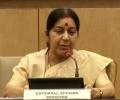
Swaraj said India was hopeful that it will be able to convince China to give its backing.

Ahead of Prime Minister Nawaz Sharif's visit to United States in October, the United States is negotiating a pact on the new limits on Pakistan's nuclear weapons and delivery systems, a deal which might lead to an agreement that is similar to the Indo-US civil nuclear deal, according to a media report.
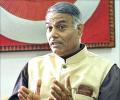
Latching on to the terrorist attack in Pampore that killed eight Central Reserve Police Force personnel, Sinha also said that 'nothing' has come out, or will, of the Centre's Pakistan policy.
China on Monday said differences remain among members of the Nuclear Suppliers Group over the inclusion of new countries and the issue was not even on the agenda of the grouping's meeting in Seoul this week, a day after External Affairs Minister Sushma Swaraj asserted that Beijing was not opposing India's entry
China has conveyed its willingness to enhance cooperation with India on combating the menace of terrorism, including in the United Nations, President Pranab Mukherjee said on Friday winding up a "fruitful and productive" four-day visit to that country.
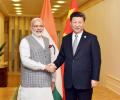
The meeting, which lasted for nearly 50-minutes, comes in the backdrop of stiff Chinese opposition to India's entry into the NSG, which looks after critical issues relating to nuclear sector, including trade and export of nuclear technology.

The strategy, President Donald Trump said, is tailored and flexible to address the wide array of threats in the 21st century.

Ghose was head of Indian delegation to the conference on the CTBT in Geneva in 1996 and she is hailed for strongly outlining India's position in opposing the treaty.
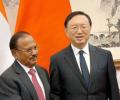
National Security Advisor Ajit Doval and his Chinese counterpart Yang Jiechi will meet in Hyderabad in November first week for informal dialogue on the state of bilateral relations
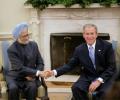
In the mid-1980s, India and the US struggled to arrive at sufficient confidence for Washington to even sell a supercomputer to India for monsoon prospecting. Now, the most sensitive military technologies, data, and intelligence resources are being shared. This would not have happened without that one, big deal that changed the fundamentals of India-US relations, notes Shekhar Gupta.

The head of the Congress's first family has never been an astute politician, points out Amulya Ganguli.

Mukherjee said Prime Minister Narendra Nodi and Chinese President Xi Jinping Would be meeting soon on the margins of G-20 summit scheduled to be held in China later this year.
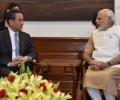
Wang and Swaraj also discussed issues relating to annual BRICS summit which will be hosted by India in Goa in October.
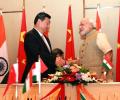
'China's actions at the NSG will certainly taint India-China bilateral relations and enhance suspicion of China's intentions. A fresh clear-eyed and objective evaluation of the India-China relationship is necessary, especially as India tries to correct adversely balanced bilateral economic ties and the two countries engage over the long-term,' says Jayadeva Ranade.
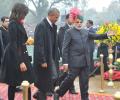
'Reviving the nuclear deal was crucial before the Obama visit... It was time for the BJP to admit that it was wrong, and redo the civil nuclear liability laws.'
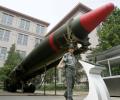
Despite four disarmament section talks and six strategic dialogues between the two foreign ministries, China's intransigence on recognising Indian nuclear status resulted in no confidence building measures in the nuclear field between the two, says Srikanth Kondapalli.

Although the pact would focus mainly on the Pacific and the South China Sea region, any action designed to deter China with or without New Delhi's active participation is a welcome move, notes Commodore Venugopal Menon (retd).
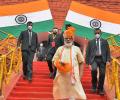
According to the details provided by Muraleedharan, the prime minister made five visits each to the United States, Russia and China, and multiple trips to some other countries like Singapore, Germany, France, Sri Lanka and the United Arab Emirates.

The expulsion is likely to cloud India-China ties as Narendra Modi visits China for the G-20 Leaders Summit on September 4-5 and Xi Jinping is scheduled to be in Goa for the BRICS meeting on October 15-16.
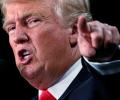
United States president-elect Donald Trump's tweet for strengthening and expansion of country's nuclear arsenal is indicating a major policy change as against the Obama Administration which had pushed for reduction and ultimately elimination of nuclear weapons.

Biden has reiterated America's support for India's permanent membership on a reformed UNSC and its entry into the NSG during his first in-person bilateral meeting with Modi at the White House.

The foreign secretary said almost all major initiatives of India in SAARC did not fructify due to hurdles posed by Islamabad.

China on Monday said India's membership bid in the NSG has become "more complicated" under the "new circumstances" as it again ruled out backing New Delhi's entry in the grouping, saying there should be non-discriminatory solution applicable to all non-NPT signatory countries.

Vajpayee had always felt that India must act with conviction and panache. He decided that, irrespective of the attendant risks, he would undertake what many felt was a precarious course. A fascinating excerpt from N K Singh's Portraits Of Power: Half A Century Of Being At Ringside on Atalji's 96th birthday, December 25.
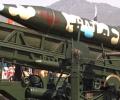
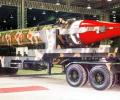
Pakistan is believed to have 140-150 nuclear warheads this year, 10 more than last year. In contrast, India is said to have 130-140 nuclear warheads, according to the annual nuclear forces data by Stockholm International Peace Research Institute.

Three Chinese journalists based in India representing the state-run Xinhua news agency were denied permission for extended stay in the country.

Key was not to be left behind and quipped that he is thankful to Modi for not raising his country's poor performance in the series so far. New Zealand were whitewashed 0-3 in the Test series and are trailing in the ongoing five-match ODI series as well.

If China's behaviour in the past on ticklish issues is any indication then China could eventually support India's NSG application, says Rup Narayan Das.

With Shanghai Cooperation Organisation set to admit India and Pakistan amid growing rancour over their Nuclear Supplies Group membership bid, a Chinese state-run daily expressed concern on Friday that the hostility between them may have a "negative effect" on the security grouping.
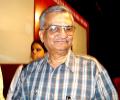
Dr Kakodkar's strategic stubbornness ultimately got India what it wanted though the negotiations with the US went to the wire, notes Shivanand Kanavi.

'India must close the missile technology gap with both China and Pakistan as early as possible, or else the credibility of India's nuclear deterrence will remain suspect,' says Brigadier Gurmeet Kanwal (retd).

China continues to hold out on fingering Pakistan as the 'mothership of terror,' declaring Masood Azhar a terrorist at the UN, and India's membership of the NSG, says China expert Srikanth Kondapalli.

Mukherjee extended an invitation to Xi to visit India which he accepted.

The Hague Code of Conduct against Ballistic Missile Proliferation is a toothless mechanism, but it may well end up serving India's interests, says Ajay Lele.
Ambassador Pankaj Sharma, Permanent Representative of India to the Conference on Disarmament (CD), Geneva, said India has been drawing the attention of the world towards these threats and the need to strengthen international cooperation to address them through its annual consensus UNGA resolution titled 'Measures to prevent terrorists from acquiring weapons of mass destruction'.

'China, which had earlier blockaded New Delhi's bid to join the Nuclear Suppliers Group by citing the nuclear non-proliferation law, finds itself in an awkward position and international isolation.' 'India needs to pursue a policy of mediation between China and the Southeast Asian countries for regional security,' says Srikanth Kondapalli.

"Both India and China are victims of terrorism and the region was suffering from the menace. The prime minister said no country is immune from terrorism and on this issue, we cannot afford to have any differences," MEA spokesperson Vikas Swarup told reporters after the meeting.
